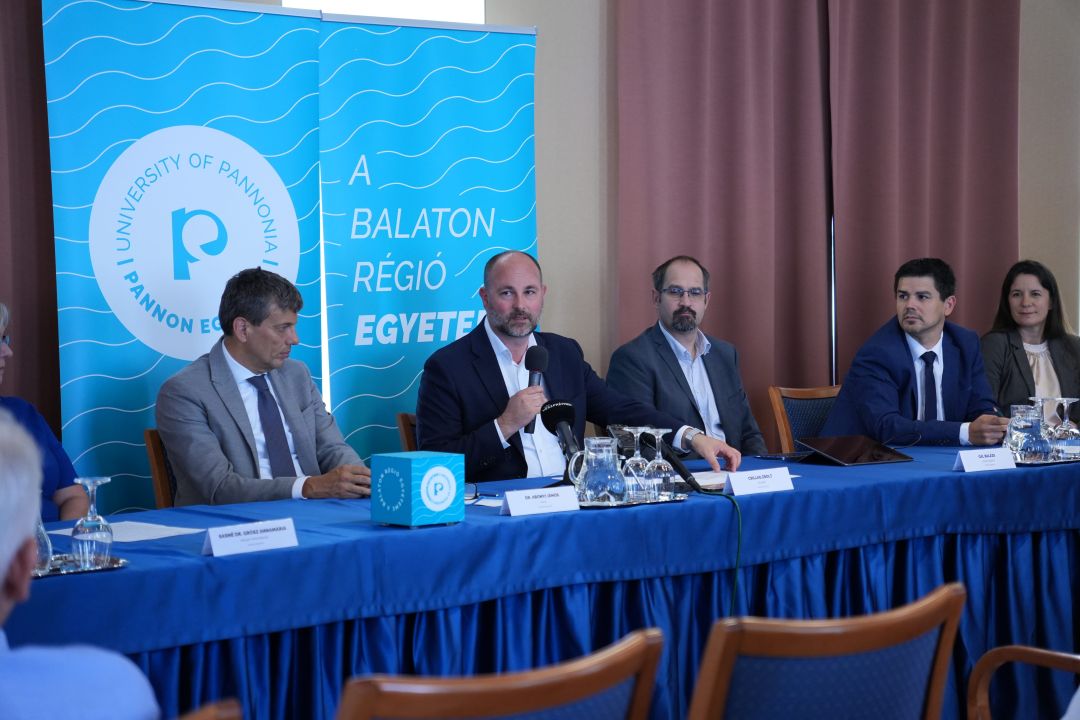
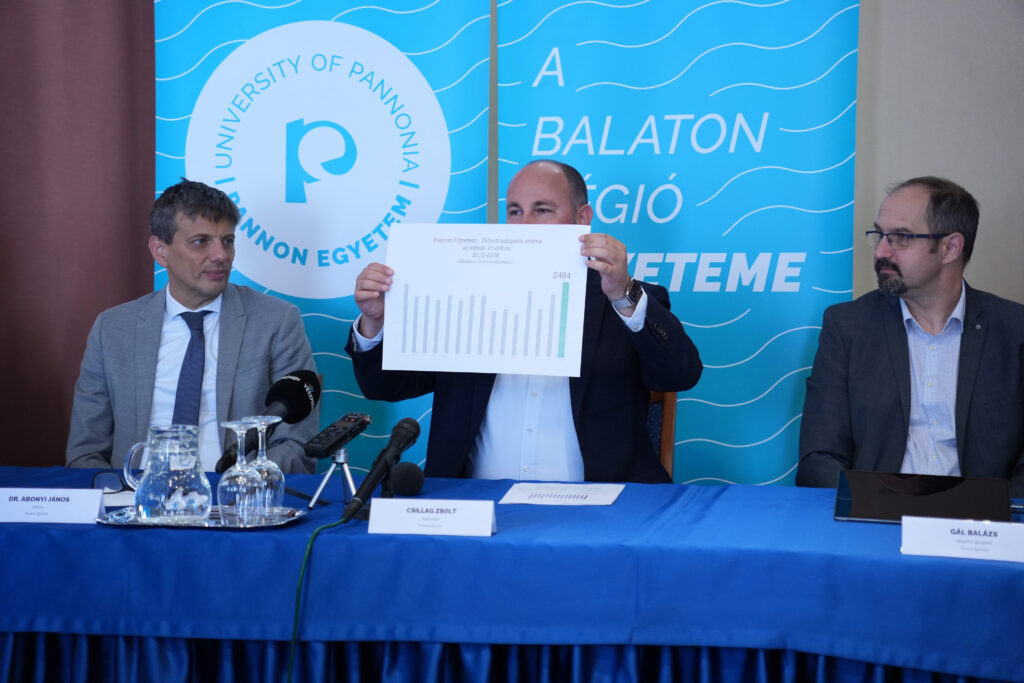
Veszprém, 24 July 2026 – Pannon University has significantly strengthened its position amongst regional universities in the 2026/2027 general admissions process: 2,484 applicants were admitted, representing an increase of 400 students (19%) compared with the previous year. The national average increase was 6%, meaning that Pannon University achieved one of the largest increases in student numbers among higher education institutions in Hungary.
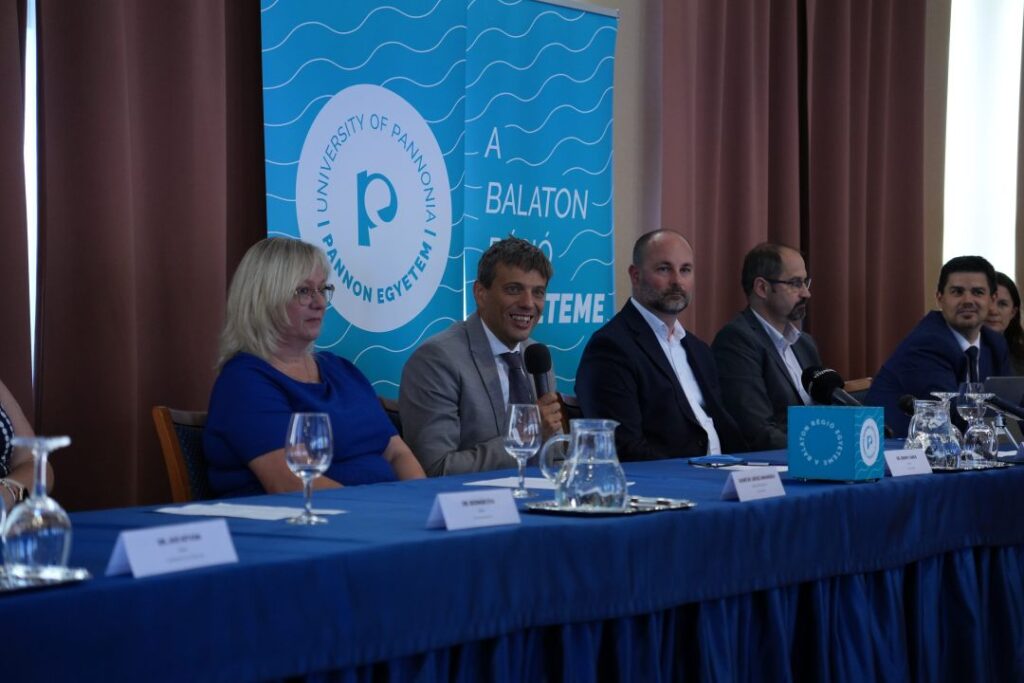
In addition to students admitted through the general admission procedure, citizens of the University of Pannonia will also include those admitted to specialised further training, doctoral programmes, and partial studies programmes under the institution's own authority, as well as third-country foreign students admitted through international scholarship programmes or to self-funded programmes. We expect a total of over 2,800 enrolled students.
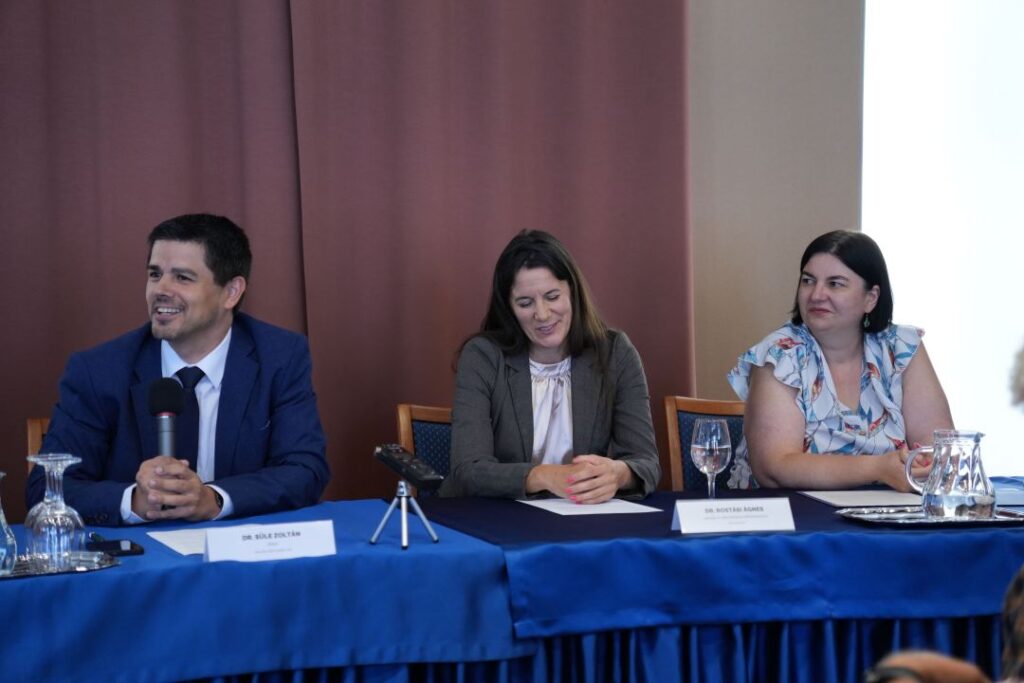
As in the previous year, Pannon University has filled all state-funded places on a number of its courses; 77% of the admitted students will be able to take part in state-funded degree programmes. The institution is committed to the continuous development of its programme portfolio and course content, achieved through collaboration with corporate partners. The proportion of students opting for self-funded study programmes that meet the needs of the economic and social environment has increased by nearly 40%compared to the previous year, which points to the increasingly widespread recognition of the value of the degrees awarded by the University of Pannonia.
The institution’s courses offer a wide range of opportunities for applicants who wish to pursue higher education whilst working. The level of interest is clearly reflected in the year-on-year increase in the proportion of part-time students; in this year’s intake, 41% of the students admitted will begin their studies on part-time and distance-learning programmes.
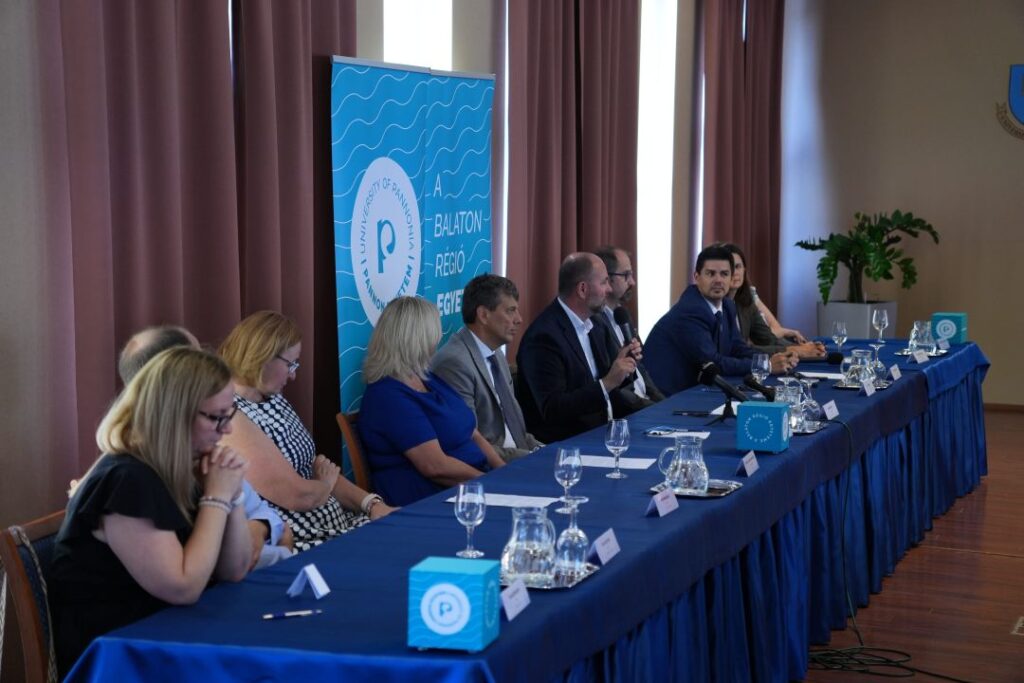
In this year's admissions process, the institution admitted the most applicants in the fields of economics, IT, and engineering. Among the undergraduate programmes, Computer Science and Engineering, Business Administration and Management, Psychology, Mechanical Engineering, Electrical and Computer Engineering, and Finance and Accounting proved to be the most popular. Of those admitted to master's programmes, most were admitted to the new programme at the Faculty of Engineering and Information Technology, Artificial Intelligence Informatics, but ESG – Environmental, Social, and Governance Specialist; English Language Teacher, and Mental Health and Community Builder programmes remain popular.
In this year’s admissions process, as in last year’s, the Faculty of Humanities admitted the highest number of students; nearly 30% of those who applied to the institution will begin their studies as students of that faculty.
It is still possible to be admitted to several courses at Pannon University through the supplementary admission procedure in a self-funded capacity for those who were not admitted now, or who did not apply to any institution previously, and in some teacher training courses there will also be an opportunity to apply for state-funded training.
The list of degree programmes available in the supplementary admission procedure will be found in the admission brochure, which is expected to be published on the afternoon of 30 July. As usual, interested parties can apply electronically via the felvi.hu website until 7 August.
Pannon University Admissions Results by Faculty
FACULTY OF ECONOMICS
A total of 578 students were admitted to the Faculty of Economics, which is at the forefront of the world's business schools and holds international AACSB accreditation, with 358 of them being state scholarship recipients.
Of the bachelor's degree programmes, most students can begin their studies full-time and by distance learning on the Technical Management, Finance and Accounting, and Business Administration and Management programmes. Among the master's programmes, Technical Management and MSc in Management and Organisation were the most popular for full-time studies, while the MBA programme was the most popular for distance learning. Of the higher education vocational programmes, most students can begin their studies full-time on the Tourism and Catering, and Trade and Marketing programmes, and by distance learning on the Business Administration and Management programme.
With its student-centred approach and wide range of training offerings, the Faculty of Economics provides its students with the opportunity to lay the foundation for a successful career path. In September 2026, alongside the PhD programme, a new year of the Business Doctoral Programme, the DBA programme, will commence, and the portfolio will be expanded with a new course: the Air Services Manager postgraduate specialisation will be launched in English.
As part of the supplementary admission procedure, all undergraduate programmes at the Faculty of Economics which were launched as a result of the normal admission procedure will be offered on a self-funded basis. Furthermore, there is also an opportunity to apply for the postgraduate training courses in Human and Organisational Development Trainer and Public Policy Data Analyst.
We are pleased to announce the Uplifting Scholarship for students admitted to the field of economics on a self-funded basis. Under this scheme, provided they meet the specified criteria, eligible students may receive a discount of 50 or 75% self-funded fee discount.
Faculty of Economics Zalaegerszeg
The Faculty offers both of its undergraduate programmes (Business and Management, and Finance and Accounting) on both full-time and part-time (correspondence) modes. The number of students admitted to the Faculty through the 2026 general admissions process shows an increase of 78% compared with last year’s general admissions process. For state-funded places on the full-time Finance and Accounting degree programme, the minimum entry score is 336 points, whilst for the full-time Economics and Management degree programme, it is 344 points.
Of the students admitted, 64% were accepted onto full-time programmes. The proportion of self-funded students is 29%. The Faculty will support students newly admitted to self-funded programmes, as well as those to be admitted through the supplementary admissions process, with various forms of financial assistance and scholarships. The Faculty will inform students of this via the institution’s website and the various media channels of the University of Pannonia, Zalaegerszeg.
The Faculty is advertising all courses commenced based on the results of the 2026 admission procedure in the supplementary procedure as fee-paying, and is inviting applicants. Young people who were not admitted anywhere in the general procedure or who did not apply to any higher education institution at all can apply within the framework of the supplementary admission procedure.
CIRCULAR ECONOMY UNIVERSITY CENTRE – NAGYKANIZSA
The University Centre for the Circular Economy further strengthened its position in the 2026 admissions process: the number of students admitted increased by nearly 25% compared with the previous year. These results confirm that an increasing number of students are choosing degree programmes that combine up-to-date technical, IT and economic knowledge with an approach designed to prepare them for the challenges of the future.
In this year's admissions process, the most interest was shown in Operations Engineer-IT, Engineering Informatics, and Commerce and Marketing programmes, while engineering courses and master's programmes related to the circular economy theme also represented a stable attraction for applicants.
At the Nagykanizsa University Centre, thanks to dual training opportunities and close cooperation with corporate partners, students can gain experience in real industrial and business environments during their studies.
The aim of the Centre for University Studies on the Circular Economy is to train professionals who, with innovative thinking, up-to-date knowledge, and a complex perspective, can contribute to the sustainable development of the economy and industry. The knowledge acquired here signifies both competitive professional preparedness and practical experience in the job market.
All training courses commencing in this year's admission procedure will also be advertised in the supplementary admission procedure in a self-funded capacity, thus the opportunity for further study is open to those who are now deciding to commence their higher education studies.
FACULTY OF ENGINEERING
The Faculty of Engineering at the University of Pannonia will admit 401 new students in the 2026 general admissions process, thereby maintaining the outstanding intake figures achieved last year. The number of students admitted to undergraduate programmes has risen from 275 to 329, representing an increase of nearly 20 % and reflecting the appeal of the Faculty’s programmes. Among the most popular degree programmes is the Bachelor’s degree in Mechanical Engineering, to which a total of 123 students were admitted in Veszprém and Zalaegerszeg, followed by the Bachelor’s degree in Chemical Engineering with 58 students. A new development this year is that the Bachelor’s degree programme in Test Engineering will also be launched in Veszprém. The Water Management Engineering programme in Nagykanizsa and the Technical Engineering Assistant programme in Ajka further strengthen the Faculty’s regional presence.
The ESG – Environmental, Social and Governance Specialist Master’s programme, with 38 students, is a key component of the programme portfolio. The number of students admitted to the Bachelor’s programme in Environmental Engineering has increased by nearly 44 % in the space of a year, whilst the Bachelor’s programme in Environmental Science may be relaunched in 2026. The combined intake for these two programmes has thus doubled compared with last year. This result clearly indicates that there is growing interest among the public and students in climate change, the protection of water resources, the circular economy and the management of environmental risks.
The University of Pannonia, as the University of the Balaton, plays a defining role in ensuring a supply of professionals related to sustainability, in the social utilisation of results, and in shaping the future of the region. The Faculty of Engineering supports its students' professional development and successful employment through modern laboratory facilities, practice-oriented education, a mentoring program, and extensive industrial collaborations.
Faculty of Humanities
The Faculty of Humanities at the University of Pannonia has once again achieved outstanding results in the 2026 general admissions process: 743 new students will be able to begin their studies in September, representing a significant increase of 11% compared with the 670 students admitted last year.
The expansion is primarily noticeable in full-time programmes, while interest in distance learning has also remained stable, which clearly shows that the Faculty can offer attractive opportunities simultaneously to those starting their careers and those continuing their studies alongside their work.
The most popular undergraduate degree programme remains psychology, alongside sustained interest in English studies, BA Communication and Media Studies, and nursery teacher and primary school teacher specialisations. It is a particular pleasure that the undergraduate programme in Political Science is showing increasing popularity.
Among the master's programmes, the master's degree in Communication and Media Studies, launched for the first time this year, was an outstanding success, while interest in the master's degree in Mental Hygiene Community and Relationship Building continued to rise. The master's degree in Regional and Urban Development continues to be one of the country's leading educational programmes.
Confidence in teacher training programmes – particularly in undivided teacher training and short-cycle teacher training programmes – remains strong.
This year's results also attest to the University's internationalisation efforts: the admission of international students has significantly increased, particularly due to the growing interest in programmes offered in English, the Stipendium Hungaricum programme, and admissions conducted under the University's own authority.
The admission results confirm that the courses offered by the Faculty of Humanities are equally capable of responding to societal, labour market, and public education challenges, while with its continuously expanding and renewing course portfolio, it offers modern further education opportunities to an increasing number of applicants and serves the needs of the region, the country, and the international higher education market.
Faculty of Technical Information Technology
The Faculty of Engineering and Information Technology at the University of Pannonia has successfully concluded the 2026 general admission process. A total of 656 students have been admitted to the faculty's information technology and electrical engineering programmes, exceeding last year's intake by 150 students, or approximately 30 percent. This growth is significant in the longer term as well, with the number of admitted students increasing by 64 percent over two years.
Of those admitted, 605 will be able to start their studies as state scholarship holders, meaning that more than 92 percent of the new students can study with state support. The vast majority of those admitted will begin their studies in bachelor's or master's programmes: 535 students were admitted to bachelor's programmes and 87 to master's programmes. The increase is significant at both levels of education: the number of admitted students in bachelor's programmes increased by 29 percent, and in master's programmes by 32 percent compared to the previous year.
Behind the numbers, there is not only quantitative growth but also a significant renewal of the training offer. In the 2026/2027 academic year, three new courses will be launched at the Faculty of Engineering and Information Technology. The faculty is among the first nationwide to launch a Master's degree in Artificial Intelligence Informatics, for which 48 students were admitted in the very first admission procedure. The new course prepares students for the theoretical foundations of artificial intelligence, as well as its practical, industrial, and societal applications.
A new opportunity is also emerging in the form of an electrical engineering undergraduate programme delivered via a distance learning system, which will commence with 43 new students. The programme primarily offers a flexible further education opportunity for those who wish to acquire up-to-date engineering knowledge while working or to further develop their professional expertise. The faculty's internationalisation efforts are also strengthened by the launch of an undergraduate programme in Computer Science in English, for which we have admitted 15 students to the first cohort.
The most popular course remains the BSc in Computer Science: a total of 200 students chose the Hungarian and English, full-time and part-time study modes combined.
The admissions results show a growing interest in practice-oriented courses that provide up-to-date IT and.
The education of students is supported by modern laboratory infrastructure, an active and internationally recognised research environment, and close cooperation established with domestic and international corporate partners. The Faculty of Engineering and Information Technology aims for its students to acquire up-to-date, directly applicable knowledge, with which they can successfully integrate into the rapidly changing technological environment and the dominant fields of the labour market.
The Faculty of Engineering and Information Technology also awaits those interested in IT and electrical engineering courses during the supplementary admissions procedure.
Congratulations to all our admitted students!
Photos: Ákos Molnár/Pannon University